From Paperwork to Protection: How Simple Actions Prevent Complex Incidents

01 Jan 2026
Implementing Practical Mitigations to Promote a Culture of Safety
Even in 2025, fatal accidents involving unguarded machinery continue to appear in the annual reports of the Health and Safety Executive (HSE). These incidents are not the result of new or complex risks – they stem from neglecting well-understood fundamentals: hazard identification, risk evaluation, effective guarding, and practical mitigations – all underpinned by leadership accountability and organizational awareness.
In a recent HSE prosecution, a worker was fatally injured after becoming trapped in moving machinery that lacked adequate guarding. Investigators found that risk assessments had not been completed, and the hazard had been identified internally more than a year earlier. This wasn’t a failure of technology; it was a failure of culture, leadership, and follow-through. It’s a reminder that written procedures and policies mean nothing unless they’re appropriate, actively implemented and reviewed.
According to HSE statistics, in 2024-2025 there were 13 worker fatalities attributed to 'contact with moving machinery' in Great Britain (source: HSE Fatal Injuries Report).
The Basics Still Matter
Under the Health and Safety at Work etc. Act 1974 and the Provision and Use of Work Equipment Regulations 1998 (PUWER), every employer must ensure that machinery is safe to use and that appropriate guards and control systems are in place to prevent access to dangerous moving parts – these are not emerging requirements, they are mature, well-communicated, and industry standard as the most established safety requirements in UK industry – yet the HSE still investigates multiple serious injuries and fatalities every year caused by:
- Inadequate or missing fixed guarding
- Disabled interlocks or bypassed safety systems
- Out‑of‑date or in some cases; missing risk assessments
- Maintenance or cleaning tasks performed on live machinery
In addition to UK regulatory requirements such as PUWER, machinery safety is guided by a family of harmonized international standards. ISO 12100:2010 defines the general principles of risk assessment and risk reduction for machinery design. For electrical systems, EN 60204-1:2018 (Safety of machinery – Electrical equipment of machines) sets out essential requirements for wiring, protection, and control. Together, these form the baseline framework for safe machinery design and operation across all sectors.
The Real Price of Getting It Wrong
For many senior leaders, the technical details of Machinery and PUWER compliance may feel distant. But when an incident occurs, the business, legal, and personal consequences are immediate and far-reaching. In recent years, fines for fatal machinery incidents have exceeded £1 million, and in several cases, directors have received custodial sentences.
Financial Impact:
- HSE prosecutions for fatal machinery incidents regularly result in fines exceeding £800,000, even for mid-sized firms.
- Additional costs from downtime, legal fees, compensation, and insurance can multiply the impact many times over.
- For large organizations, fines are linked to turnover - meaning penalties can run into millions of pounds.
Personal Accountability:
- The HSE and CPS (Crown Prosecution Service) can pursue individual prosecutions under Section 37 of the Health and Safety at Work Act or the Corporate Manslaughter and Corporate Homicide Act 2007.
- Convictions can result in prison sentences, director disqualification, and lasting professional and personal consequences.
Reputational and Operational Fallout:
- Every HSE prosecution is public. Media coverage that links a company to a preventable fatality damages reputation instantly and enduringly.
- Key clients – particularly large brands – may terminate contracts over supplier safety concerns.
- Internally, such incidents erode trust, morale, and culture, undoing years of progress in a single moment.
When viewed through this lens, the true cost of non-compliance is not only financial – it’s human, reputational, and strategic.
The Role of Risk Assessment
Risk assessments, using standards such as ISO 12100:2010, are the foundation of machine safety management. It’s not ‘just paperwork’; it’s the process that identifies, evaluates, and controls hazards before any incidents can occur. It turns awareness into prevention and action.
A robust risk assessment does more than satisfy auditors; it prevents worst case scenarios by:
- Identify hazards throughout all phases - operation, cleaning, setup, and maintenance.
- Evaluate the likelihood and severity of potential harm.
- Implement engineering and organizational controls, prioritizing elimination and guarding over procedural reliance.
- Be reviewed periodically and whenever changes occur in process, personnel, or equipment.
A living, reviewed, and correctly applied risk assessment transforms from a simple document into a prevention tool – one that protects people, processes, and reputations alike.
When control systems are part of a machine’s risk reduction strategy, standards such as ISO 13849-1 (Safety-related parts of control systems) and IEC 62061 (Functional safety of safety-related control systems) provide structured approaches for determining the required performance level (PL) or safety integrity level (SIL). Applying these standards ensures that control systems achieve the necessary reliability and diagnostic coverage to prevent hazardous failures.
Guarding: The Simplest, Strongest Control
In addition to control system implementation, guarding remains one of the most effective and proven controls in preventing serious injury. Under PUWER Regulation 11, employers must ensure that measures are in place to either prevent access to dangerous parts or stop movement before access occurs. Well-designed guarding not only protects people – but it also improves reliability and up time by preventing damage, unplanned stops, and human intervention in dangerous zones.
In practice, this means:
- Fixed guards wherever possible
- Interlocked guards where access is essential
- Presence-sensing devices or trip systems as supplementary measures
- Scheduled inspections to verify guards remain secure and functional
Every time a guard is removed “just for convenience,” a risk assessment fails in practice. Guarding should never be seen as an obstacle to production – it is a guarantee of continuity and safety. In many cases effective guarding is complemented by reliable emergency stop devices. The design and performance of these are specified in EN ISO 13850:2015 (Safety of machinery – Emergency stop function), which defines principles for actuation, visibility, and reset. Correct application of this standard helps ensure operators can intervene quickly and safely in abnormal situations.
Culture: The Deciding Factor
Most organizations already have risk assessments and safety policies. What separates safe workplaces from unsafe ones is culture – whether leadership truly believes safety is integral.
A strong safety culture means:
- Leaders act visibly and consistently when safety issues arise
- Safety teams have authority to halt unsafe operations
- Audit findings are acted upon immediately, not filed for later
- Workers are empowered to speak up and intervene without fear of blame
Safety culture cannot be delegated; it must be modelled from the top. The best risk assessment in the world achieves nothing if leadership doesn’t make safety a priority.
Final Thoughts
No one should lose their life to an unguarded machine in 2025. The laws are clear, the standards mature, and the engineering controls are well-understood. What remains is the will to implement, sustain, and enforce – the responsibility to act. Because ultimately, safety is not a cost – it’s protection for people, leadership, and reputation alike.
"The cost of prevention is always less than the cost of a tragedy."

You may be interested in...
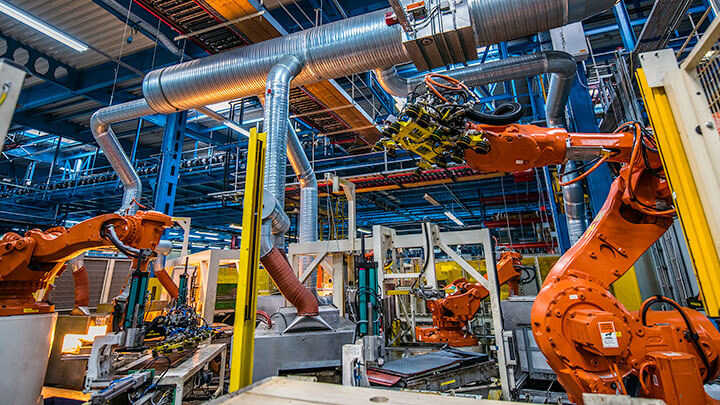
Functional Safety Services
From early design stages through to production, our modular FS solutions provide flexible options for manufacturers, and our FS Mark provides stakeholders with visibility for products they purchase, install, or utilize in operations.
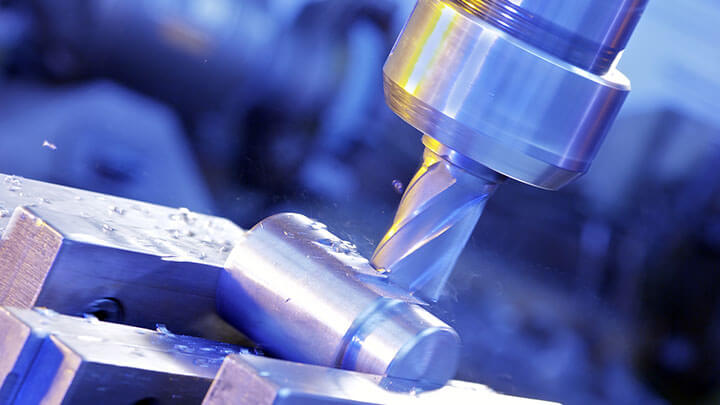
Machinery & Tools
Our experts help ensure your products meet regulatory requirements domestically and globally with expertise in testing and certification.